
My Neighbor Moved Our Fence Six Inches Onto My Property While I Was Away – What I Found Buried Beneath It Stopped Me Cold
Por
Andrii Tykhyi
25 sept 2026 - 10:26
Karen might have believed a single fence post had been moved by mistake. But every post had shifted exactly six inches, and her neighbor's nervous explanation only made her more suspicious.
Publicidad
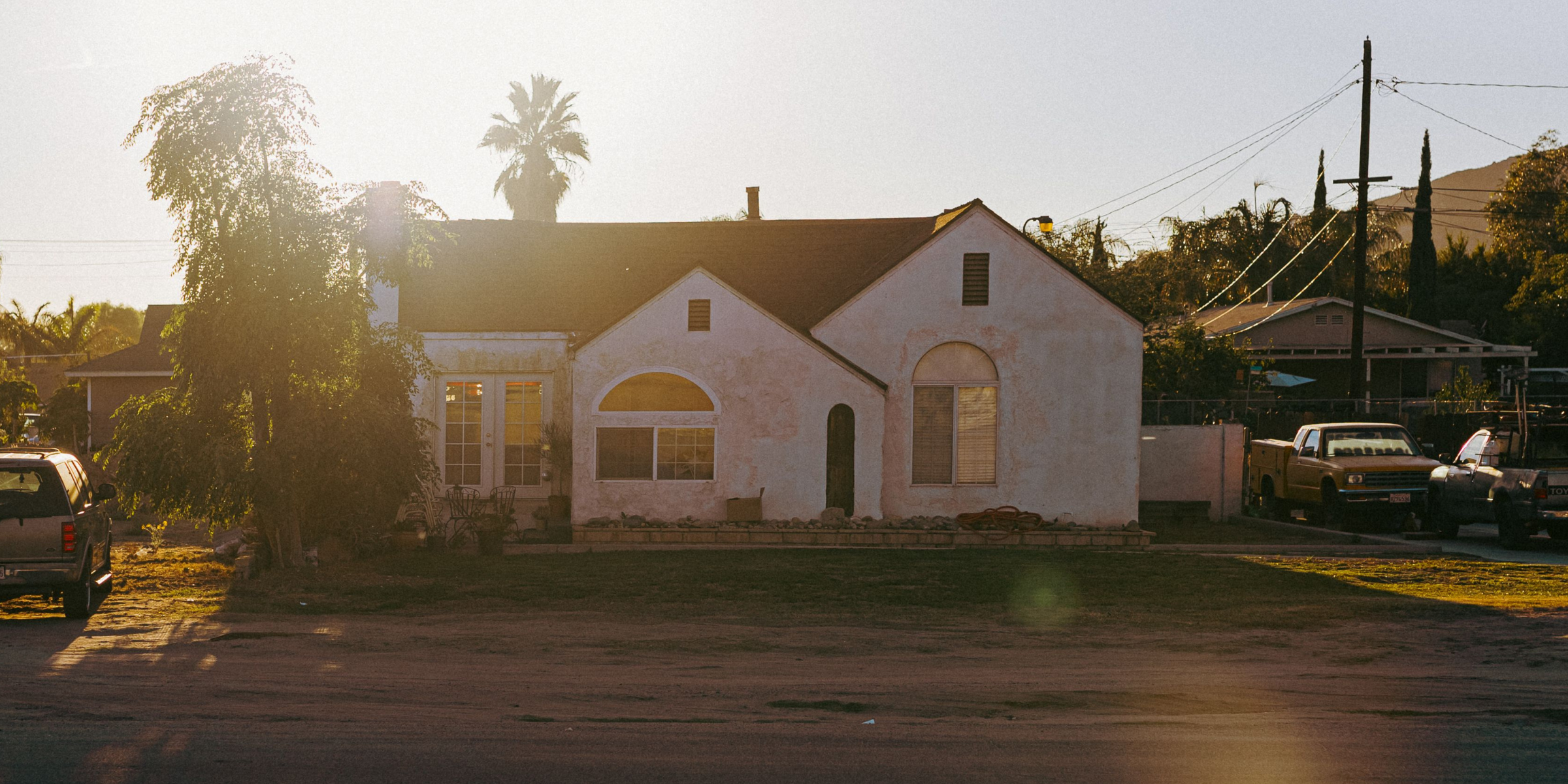
My name is Karen, and I live in a quiet subdivision outside Denver, in the same house I've owned for almost 20 years.
For the last eight of them, I've shared a wooden fence line with my neighbor, Gary.
We weren't close friends, but we'd always gotten along.
Whenever the fence needed repairs, we split the cost evenly.
If one of us noticed a loose board or a leaning post, we'd mention it to the other and deal with it.
It was the kind of uncomplicated neighbor relationship I appreciated.
Which was why I knew something was wrong when I came home from Chicago.
Publicidad
I'd flown out to visit my daughter for 10 days.
When I returned, my backyard looked normal at first.
The patio furniture was where I'd left it. My flower beds were fine. The wooden fence stood straight along the property line.
Still, something felt subtly off.
I walked around the yard twice but couldn't identify it, so eventually I told myself I was imagining things.
A few days later, my landscaper figured it out.
He had been working along the back bed when he stopped near the fence and pulled out his tape measure.
"Did you have the fence moved?" he asked.
Publicidad
I looked up from the patio. "Moved?"
He pointed toward the survey marker we'd used the previous year when I had some landscaping done.
"This is about six inches onto your side compared to the survey markers from last year."
I stared at him.
"Six inches?"
He measured again.
"About that, yes."
Once he showed me, I couldn't unsee it.
The entire shared section of fence had shifted toward my yard.
Publicidad
Not one loose post.
Not one repaired section.
The whole line.
I called Gary immediately.
"Did you do something to our fence while I was gone?"
There was a pause.
Not long, maybe a second, but after eight years of talking to him, it was enough.
"I, uh, had a contractor out here for something unrelated," he said. "Maybe they bumped it by accident."
I actually pulled the phone away from my ear and stared at it.
Publicidad
"Gary, contractors don't accidentally move an entire fence."
"I don't know what happened, Karen."
"Every post is six inches farther into my yard."
"Then maybe they misunderstood where it was supposed to go."
His answer was so ridiculous that for a moment I didn't know what to say.
The fence wasn't crooked.
Every post had been dug out and reset perfectly straight.
Whoever had done it had worked carefully.
And they had done it while I was in Chicago.
Publicidad
Gary knew that.
I knew he was lying, and from the tone in his voice, I got the distinct impression he knew that I knew it too.
"I'll talk to the contractor," he said quickly.
Then he ended the call.
That afternoon, I walked the entire fence line myself.
I wasn't sure what I was looking for.
I think I just needed to understand what had changed.
Near the third post, beside a flowering bush that had been there for years, I noticed the soil looked different.
Darker.
Publicidad
Looser.
Recently disturbed.
The rest of the ground around the fence posts had already begun settling, but this patch looked as if somebody had dug it up separately and packed it back down in a hurry.
I stood there for several minutes.
Then I went to the garage and got a shovel.
With every scoop of dirt, my suspicion grew.
About a foot down, the shovel struck something solid.
The sound was unmistakable.
Metal.
I dropped to my knees and began clearing the dirt away with my hands.
Publicidad
A rectangular metal box emerged from under the soil.
At first, all I could see was the lid.
Then I brushed across it with my palm.
There was a name engraved on the top.
"ELLEN."
I stopped completely still.
Ellen had been Gary's wife.
She had died several months earlier.
I had known her the entire time Gary lived next door.
Publicidad
She'd been quieter than he was, but warm.
She used to wave whenever she saw me outside and sometimes stopped to chat over the fence.
I looked at the box again.
For one terrible second, I wondered whether I'd just uncovered her ashes.
I stood so quickly that dirt slid back into the hole.
"Gary!"
I didn't bother calling him.
I shouted.
His back door opened less than a minute later. He stepped onto his patio, saw me beside the fence, and then saw the box.
Publicidad
His face changed instantly.
He came toward me.
"Karen."
"What is this?"
He looked at the exposed lid.
"Please don't open that."
Whatever doubt I had left disappeared.
"You knew this was here."
He didn't answer.
Publicidad
"You moved the fence because of this, didn't you?"
"Karen, let me explain."
"You told me a contractor accidentally moved an entire fence six inches."
"I know."
"You lied to me."
"I know."
I looked down at the box, then toward the old survey marker.
Something clicked.
I grabbed the tape measure my landscaper had left with me and measured from the marker to the hole.
The box sat only a few inches inside my actual property.
Publicidad
Six inches of moved fence had been enough to put it on Gary's apparent side.
I looked at him.
"You didn't want six inches of my yard."
His shoulders dropped.
"You wanted this."
He stared at the ground.
That realization somehow made the whole situation stranger.
"What did you bury here?"
Publicidad
"It's not what you're thinking."
"I don't know what I'm thinking anymore."
He rubbed both hands over his face.
"It's Ellen's."
"Her ashes?"
"No."
That relieved me more than I expected.
Gary crouched near the hole but didn't touch the box.
"It's just some things of hers."
"Then why are they buried in my yard?"
A flicker of tension crossed his face.
Publicidad
"I didn't think of it as your yard."
I almost laughed because the answer was so absurd.
"The survey marker seems pretty clear."
"That's not what I meant."
"Then explain what you meant."
He looked toward the flowering bush beside us.
I'd barely paid attention to it over the years.
Publicidad
It grew along the fence and produced pale purple flowers every spring and summer.
"Ellen loved that thing," he said.
"The bush?"
He nodded.
"She used to come out here every evening when the weather was decent. She'd stand right there or sit in the chair on our side and look at it."
I remembered seeing her there.
Sometimes she would reach through the fence to touch the flowers.
After Ellen died, Gary said he couldn't stop thinking about the spot.
Eventually he put together a small memorial box. Her wedding ring. A photograph. A dried flower she'd saved. A letter she'd written during the last months of her life.
Publicidad
"And you buried all that here?"
He nodded.
"Why?"
"I wanted something of hers somewhere she loved."
I felt some of my anger shift, but it didn't disappear.
"You still haven't explained the fence."
Gary was quiet.
So I asked the simplest question.
"Why didn't you ask me?"
Publicidad
His eyes lifted toward mine and then dropped again.
That hesitation told me more than his answer did.
"You thought about asking."
"Yes."
"And?"
"I couldn't."
"Couldn't?"
"I started a note twice."
I stared at him.
He had known exactly what he was doing.
This wasn't a grieving man making one impulsive decision.
Publicidad
He had considered asking permission and deliberately decided not to.
"Why wait until I went to Chicago?"
He looked embarrassed.
"Because I knew you were gone."
"So you wouldn't have to hear me say no."
His silence confirmed it.
I stepped back from him.
"You don't get to decide my answer isn't convenient and take the choice away from me."
"I know."
"No, Gary. You moved a fence."
Publicidad
"I know."
"You hired people to dig up every post and put them back inside my property. Then you buried this here and lied to my face."
His voice cracked slightly.
"I couldn't lose that spot too."
That sentence stopped me.
For the first time, I wasn't looking at the man who had taken six inches of my backyard.
I was looking at someone who had already lost much more than that.
But sympathy wasn't the same thing as permission.
I looked again at the box.
Publicidad
"You said there's a letter."
Gary stiffened.
"Karen."
"What does it say?"
"It's private."
"You buried it under my yard."
He closed his eyes.
I regretted how sharp that sounded almost immediately, but I didn't take it back.
Gary crouched and lifted the box out of the ground.
Dirt clung to the sides.
When he opened it, I saw a photograph of him and Ellen when they were much younger.
Publicidad
Her wedding ring lay inside a small cloth pouch.
Beneath it was a pressed purple flower.
At the bottom was a folded sheet of paper.
Gary stared at the letter for a long time. Then he unfolded it himself and scanned the page.
"I think you're going to be angry."
"I already am."
"This might make it worse."
Publicidad
He found a paragraph near the bottom and handed the letter to me.
"Read that part."
I looked where he was pointing.
Ellen had written that if the bush was still blooming the following spring, Gary should ask me whether he could take a cutting from it.
Ellen had written that if it was still blooming the following spring, Gary should ask me whether he could take a cutting from it.
She wanted him to plant one on their side.
I read the paragraph twice.
Then I looked at him.
"She told you to ask me."
Publicidad
Gary said nothing.
"She didn't ask you to bury this box here."
"No."
"She didn't ask you to move the fence."
"No."
"She wanted a cutting."
"I know."
Suddenly the entire story changed again.
Until that moment, some part of me had assumed Gary had done something wildly inappropriate while trying to honor Ellen's last wish.
But Ellen's wish had been perfectly reasonable.
Publicidad
Ask Karen.
Take a cutting.
Plant it at home.
Gary had turned that into something completely different.
"Why?" I asked.
He looked toward the bush.
"Because I didn't want to move it somewhere else."
I waited.
He swallowed.
"I wanted it here. I wanted to look out and see the same bush in the same place she'd seen it."
For the first time since I'd begun digging, I understood.
Publicidad
A cutting would be small.
It would look different.
It might not survive.
Even if it did, it would grow somewhere else.
Planting it on his side would mean accepting that the place where Ellen had stood every evening didn't belong to him and never had.
It would mean taking something from that memory and allowing it to become something new.
Gary wasn't ready for that.
Publicidad
So instead, he had tried to preserve the original.
He moved the boundary around it.
"I kept thinking there had to be one thing that didn't change," he said quietly. "One place that was still exactly where she'd left it."
I looked at the disturbed earth between us.
"And you decided the answer was to make it yours."
His eyes filled.
"When you say it like that, it sounds awful."
"It was awful."
He nodded.
Publicidad
I let the silence sit there for a moment.
Then I said, "The fence goes back."
"Okay."
"Exactly where it was."
"Okay."
"And you're paying for it."
"I will."
I expected him to argue.
He didn't.
He just closed the box and held it against his chest.
"I am sorry, Karen."
Publicidad
"I believe you."
That seemed to surprise him.
"But being sorry doesn't mean it stays."
"I understand."
A week later, the contractor Gary had hired returned.
This time, I was home.
I watched every post come out of the ground and go back where the survey markers said it belonged.
When they reached the third post, the flowering bush shook as they worked around it.
Gary stood on his side of the yard watching.
Publicidad
The metal box sat on his patio table.
After the workers left, he came over.
"I'll move the box tonight," he said.
"Where?"
He shrugged.
"I haven't decided."
I looked at the bush.
Then at him.
"Ellen's original request still stands, as far as I'm concerned."
Publicidad
He frowned.
"What?"
"You can take a cutting."
For several seconds, he didn't respond.
"You mean that?"
"Yes."
He looked toward the plant.
"I don't know if it'll grow."
"Then take two."
That made him laugh for the first time since I'd dug up the box.
We took two cuttings that afternoon, and Gary started them in pots on his patio so they could develop roots.
Publicidad
He buried Ellen's box on his side of the fence, beside the spot where he hoped to plant whichever cutting survived.
Not secretly this time.
I stood there while he did it.
Before covering the box, he removed the wedding ring and slipped it into his pocket.
"I think she'd be mad at me for burying that," he said.
"Based on the letter, I think she'd be mad about several things."
He smiled.
"Yeah."
Publicidad
By the following spring, one cutting had died.
The other had rooted strongly enough that Gary planted it beside the spot where he'd buried Ellen's box.
It was smaller than the original bush and uneven on one side. For weeks, I wasn't sure it would flower at all.
Then one morning I walked outside and saw three tiny purple blossoms on Gary's side of the fence.
He was already standing there looking at them.
Neither of us said much.
We didn't need to.
The fence was back exactly where it belonged.
Publicidad
The old bush was still growing on my side.
And a new one had begun growing on his.
Gary had spent all that effort trying to move a boundary because he couldn't stand the idea of losing one more thing connected to Ellen.
In the end, restoring that boundary was what finally gave him what Ellen had actually asked for.
I understood his grief.
I even forgave him.
But I never forgot what those six inches taught me.
Pain can explain why someone crosses a line.
It doesn't give them the right to move it.
Publicidad
So here is the real question: If a grieving neighbor secretly crossed your property boundary for deeply personal reasons, would understanding the motive change how you responded?
Loved this story? Here's another one for you: I spent a year learning how to live with the unanswered questions surrounding my husband and son's deaths. I never imagined that an ordinary night would bring answers frighteningly close to home.
Publicidad